|
17th Sunday |
|
|
Dear Preachers:
“Such a deal!” You can almost hear the young king Solomon say that to God in our first reading. Imagine getting an invitation from the Almighty, “Ask something of me and I will give it to you.” What an opportunity! Who wouldn’t want to have such an offer from One who could give anything? Makes us wonder what we might ask for if God gave us a blank check. So much to ask for! Where to start? How to choose?
Solomon the young king and son of David, is about to take the throne. We now know him by his reputation for wisdom. When we refer to someone as having “the wisdom of Solomon,” it is high praise. But at this stage in his life and reign, Solomon isn’t feeling very wise. He knew what he needed to reign properly: he needed wisdom and he also knew he couldn’t get it on his own. Only God could give him this gift, so wisdom is what he asks for in response to God’s magnanimous offer. Solomon didn’t have to climb a distant mountain, or succeed at Herculean tasks to get the wisdom he would need to rule well. He just had to ask for it.
Biblical wisdom is about everyday life; it concerns practical matters and guides us in living a godly life. Readers familiar with the bible will know the unique qualities of this wisdom. A person of wisdom may not be the most intellectually brilliant person in the room. When the bible speaks of a wise person, a wisdom figure like Solomon, or a prophet, it presents a person who is closely attuned to God. The wise one and God have a strong and intimate relationship and the recipient of wisdom is characterized by very practical, everyday knowledge that enables him/her to live an ethically upright life.
Solomon isn’t asking for esoteric knowledge about other-worldly mysteries. He knows as a ruler he will have to make decisions between right and wrong, not only for himself, but for the people he has been chosen to lead. He wants to be a good king, one who rules in conformity with God’s ways. Unfortunately, later in his life, we learn that Solomon betrays God’s will and becomes self-seeking. Since he was also the ruler, the nation of Israel suffers dire consequences for his betrayals of God. Still, at this early stage we can learn from Solomon about the importance of the divine gift of wisdom as we struggle to live out our Christian calling in some very ambiguous situations. We want to live good lives that reflect the divine life in us we have through baptism. We repent those thoughts and actions that were unwise and pulled us away from God. We, in short, are sorry for the things we have said and done that have hurt others...if only we had acted more wisely.
Remember two Sundays ago, Matthew began this parable discourse with Jesus’ sitting down in a boat to teach. He presents Jesus as a wisdom teacher and thus suggests to us that the wisdom we seek is given us in Jesus. He is wisdom made flesh; his actions and words are our guidance for daily life and his life in us keeps us in intimate relationship with God. When we need to know how to live and act in conformity to God’s will, Jesus is our guide. In today’s gospel he is the wise teacher who invites us to ponder and learn God’s ways; he does this by telling his disciples parables.
Today’s gospel reading is comparatively short. The lectionary even gives a shorter option. I would use the whole passage for the proclamation, but focus on one of the parables for the preaching. There are plenty of preaching possibilities in each parable. Let’s look at the first two and leave the decision up to each preacher which to choose for a focus.
Each of today’s parables is introduced in the same way, “The kingdom of heaven is like....” (Matthew prefers “kingdom of heaven” so as to avoid using God’s name; Mark and Luke use, “kingdom of God.”) First a reminder. When a parable begins in this way it is not saying the kingdom is like a treasure, a pearl or a net. Rather, the kingdom is like what happens in each complete story. Jesus’ basic message was that God’s kingdom/reign/dominion had come near. The kingdom is present when God’s sovereignty, actions and presence are felt. It is where and when God’s will is being done and God’s rule accepted and acted upon. Those who live in accordance with God’s will might then hope to enter the kingdom when it finally comes in its fullness.
We are of an age and culture that looks for things neatly defined and clearly described. If only Jesus had satisfied our need for exactness and given a precise definition of what the kingdom is and exactly where and when it occurs. If he had, we would have a precise measurement, or standard to apply. We would then be able to say, “This is definitely of the kingdom of God; this definitely not.” Of course, that would put us in control. Then other people and events would depend on us for our stamp of approval where and in whom God was acting. Instead, with parables like today’s, we have the opposite. We hear that God’s reign is multi-colored and multi-layered. We see only part of it; just when it seems to be only here...it pops up over there too--- in the most unlikely places and occasions. You just can’t box in God’s movements and inspirations. In his gospel John would say it this way, “The Spirit of God blows where it will....”
Let’s look at the “issue” of the buried and found treasure. Listeners to this parable have countered by saying the one who found the treasure is dishonest. They claim he should have reported the find to the “rightful owner.” But Jesus is not teaching about honesty here and it is not uncommon for his parables to contain characters who act in a shady way. Jesus uses worldly stories to open our eyes to the acts of the divine in our midst. He is focusing on a person’s finding a treasure, realizing its value, rejoicing and selling everything to get what is so precious. We also have to remember the times and circumstances. It wasn’t usual for people to bury valuables during times of conflict, invasion, or insecurity. Who knows? Maybe the one who buried the treasure had died; or the plot may have now been under a foreign power, like the Romans. There are numerous possibilities to explain the treasure’s presence in the field. We do best to stay with the parable: a person finds a treasure and does what he must to get it.
What a risk he is willing to take, for he sells all he has! It’s parallel to what Jesus is asking his disciples to do; to leave everything else and invest their well-being and future in him. Isn’t Jesus a “hidden treasure” for us too? Grace to follow him has been freely given us and we are invited to celebrate this “find” with joy and total dedication. We preachers will want to avoid moralizing this parable, i.e. making its primary thrust just a moral teaching and then telling people what they ought to do. Remember, the finder does nothing to earn the treasure, nor does Jesus, in this case, stress the sacrifice required to acquire it. Recognition, joy, “pure luck” and excitement dominate the emotions of the fortunate finder. At today’s Eucharist why not celebrate the sheer gift God has given us in Jesus and the constant renewal of that gift through another gift – the Holy Spirit?
The second parable varies slightly from the first; we have a merchant out searching for fine pearls. Yet, the two parables have some common elements: the discovery, joy (which we presume for the merchant since he finds what he has been searching for) and a follow-up action. The first parable has a clear element of surprise to it. How often have we found in a person, or a situation, something so good that we realize, even though we weren’t aware we were searching, we have found a treasure? Or, have we ever searched for something meaningful for our lives, found it and it was even better than we had ever hoped? While we put so much into our search, we realize we received so much more than our efforts warranted. When things like this happen, we can hear an echo of Jesus’ introduction to the parables – with a slight modification, “There, that’s what the kingdom of God is like!” The bottom line....it’s about grace. (Cf. Quotable)
In the parables we encounter God’s gracious rule. Judging from the two parables we focused on, the treasure and pearl, this rule is not something to fear. Instead, we learn that God’s reign promotes vitality, freedom and a sense of having found what we have always really wanted. We know life and service in the reign Jesus is proclaiming, will require sacrifice. But these parables encourage us to take the plunge, they tell us, “it is worth whatever you must change, or give up.”
In both parables the investment is total. Each person has taken a huge gamble by selling “all that he/she has.” What guarantee do they have? What have they done to hedge their investments in case they have made a mistake? They haven’t, instead they have plunged ahead without reserve. Is God and Jesus’ way worth the full gamble of our lives? In the parables, the wise Jesus tells us it is. He should know, he has first hand experience. It’s like a friend of mine, who rushed head long into the ocean and when he came up for air, turned to me and shouted, “Come on in, the water’s fine!” And so I did, because he was already in the water and I trusted him.
Click here for a link to this Sunday’s readings: https://bible.usccb.org/bible/readings/072626.cfm
Give your servant, therefore, an understanding heart. — 1 Kings 3:9
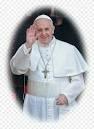
The word “understand” is used at least five times in today’s readings. To comprehend the term, “understanding heart,” from the ancient biblical perspective, we should know that Solomon is asking God for a “listening heart.” The heart in the Old Testament refers not to the organ circulating the blood, but to the seat of the intellect and the ability to discern good and evil. Solomon wants to follow God’s direction through the process of discernment. But something else also happens when a person starts listening with their hearts. Our late Pope Francis writes, in The Joy of the Gospel (Word Among Us, 2013), that:
When we live out a spirituality of drawing nearer to others and seeking their welfare, our hearts are opened wide to the Lord’s greatest and most beautiful gifts. Whenever we encounter another person in love, we learn something new about God. Whenever our eyes are opened to acknowledge the other, we grow in the light of faith and knowledge of God. If we want to advance in the spiritual life, then, we must constantly be missionaries (272).
You see, if we are to grow our relationship with God, we cannot have a spirituality that is merely a vertical me and Thee. No, to grow our relationship with God, we must have a spirituality that is me, Thee, and the other. This is a spirituality that is both vertical and horizontal. As Pope Leo states:
We must be ready to put our hands into the dough of the world! It is not enough to talk about flour without getting our hands dirty; we must touch it. . .Our time presents itself as a mill where the pains of poverty, social divisions, the challenges of new technologies, and the sincere desires for peace are still being ground together like new flour that risks being fermented with a bad leaven. . .The Kingdom will grow, not by force or by numbers but through the patience of those who, with faith and love, continue to knead with God. Pope Leo to missionaries: 'We must do the will of the Father' - Vatican News How do we do this? First, we must make the decision that we want to deepen our relationship with God and ask God for an understanding heart. Then, we must step out to encounter the other—the poor, the disadvantaged, the incarcerated, the immigrant, the sick. . . Join the justice ministries community here at HNOJ Cathedral.
Barbara Molinari Quinby, MPS, Director Office of Human Life, Dignity, and Justice Ministries Holy Name of Jesus Cathedral, Raleigh, NC
ONE GOOD BOOK FOR THE PREACHER
Anne Lamott, PLAN B: FURTHER THOUGHTS ON FAITH. New York: Riverhead Books 2005.
This book makes great reading, especially for reflective summer moments. The author, a single parent, reflects on contemporary world and national events. She also turns her reflections to parenting (a teenager), her mother’s Alzheimers, the death of friends, the change of seasons, and her political activism . She takes a preacher’s look at her daily life’s joys and questions through the eyes of faith—aided by the support and prayers of her small church community in northern California.
(The story of Lamott’s finding faith is told in her previous books, especially TRAVELING MERCIES.)
Grace means you’re in a different universe from where you had been stuck, when you had absolutely no way to get there on your own. —Anne Lamott in, PLAN B: FURTHER THOUGHTS ON FAITH, (New York: Riverhead Books, 2005), ISBN1-57322-299-2, $24.95 hardcover.
Mini-reflections on the Sunday scripture readings designed for persons on the run. “Faith Book” is also brief enough to be posted in the Sunday parish bulletins people take home. From today’s Gospel reading:
The kingdom of heaven is like a treasure buried in a field, which a person finds and hides again and out of sheer joy goes and sells all that he has and buys that field. Again, the kingdom of heaven is like a merchant searching for fine pearls. When he finds a pearl of great price, he goes and sells all that he has and buys it.
Reflection:
Why are we gathered at church today? We are here because we want wisdom; we don’t want to be tempted by fake pearls and fool’s gold. It is just not worth it. We want the real thing in our lives. We sense what it is----- WHO it is---and we want more.
We have stumbled on a treasure and know that everything else is of much lesser value. We have found a valuable pearl and we are willing to put aside whatever stands in the way of having that pearl.
So, we ask ourselves:
• What keeps us from having a closer relationship with Jesus in our daily lives? • Do we realize our faith is a treasure we have found, rather than a reward we have been given?
POSTCARDS TO DEATH-ROW INMATES
“One has to strongly affirm that condemnation to the death penalty is an inhuman measure that humiliates personal dignity, in whatever form it is carried out.” ---Pope Francis
Inmates on death row are the most forgotten people in the prison system. Each week I am posting in this space several inmates’ names and locations. I invite you to write a postcard to one or more of them to let them know that: we have not forgotten them; are praying for them and their families; or whatever personal encouragement you might like to give them. If the inmate responds, you might consider becoming pen pals.
Please write to:
• Terry Robinson #0349019 (On death row since 4?10/2000) • Mark Squires #0688223 (5/17/2000) • Paul Brown #0051026 (8/11/2000)
Central Prison PO Box 247, Phoenix MD 21131 (While the prison is in Raleigh mail for inmates is processed at this address)
For more information on the Catholic position on the death penalty go to the Catholic Mobilizing Network: http://catholicsmobilizing.org
“First Impressions” is a service to preachers and those wishing to prepare for Sunday worship. It is sponsored by the Dominican Friars.
If you would like “First Impressions” sent weekly to a friend, CLICK HERE. If you would like to support this ministry, please send tax deductible contributions to:
Fr. Jude Siciliano, OP St. Albert Priory 3150 Vince Hagan Drive Irving, Texas 75062-4736
Make checks payable to: Dominican Friars.
Or go to our webpage to make a secure online donation: https://www.PreacherExchange.com/donations.htm
FREE EMAILS:
We have two English email lists available: 1. A preacher's early reflections on the upcoming Sunday's readings and liturgy, always at least one week ahead of the Liturgical Calendar. “A tool to help Preachers prepare for their next trip to the Ambo.” Available in Spanish & English and authored by Fr. Jude Siciliano, OP. 2. Click Here to Sign Up. 2. “VOLUME II” • These reflections follow the Liturgical Calendar and appear here about mid-week each week. They are written by various guest authors. • If you would like to submit a reflection of your own, then Click Here to send it as a “Request to Post” to the Webmaster. Deadline is Monday of each week for the upcoming Sunday.
OUR WEBSITE:
https://www.PreacherExchange.com - Where you will find Preachers Exchange, which includes “First Impressions,” and “Volume 2” as well as articles, book reviews, daily homilies and other material pertinent to preaching and Scripture reflection.
FOR INFORMATION OF “ANY KIND” OR TO MAKE A SUGGESTION: Click Here
(Always includes the 6 latest reflections with the newest first.)
•
|
|