|
15th Sunday |
|
|
Dear Preachers:
PRE-NOTE: I don’t want to forget to say “thank you” for your response to our summer appeal. We received donations for our internet ministry of the Word. We always try to write thank you notes. But sometimes the donations are anonymous; sometimes they have no return address. So, thank you all, especially the “shy ones.” “Did you get it?” That’s what we ask after we have told a joke, and the punch line doesn’t get the expected laugh. Why don’t people “get it?” Well, sometimes the joke teller just can’t tell a joke. Sometimes the joke isn’t funny. But other times the listener doesn’t get the joke because he or she is from a different background, culture, or generation. They are not “in” on the joke. One of the classic comedy routines is the one by Abbot and Costello called, “Who’s On First?” The routine is about fifty years old, but I saw it again recently in a documentary about comedies and comedians. For that routine to evoke a laugh you have to be “in” on the joke, i.e., you have to know at least a little about baseball. If you don’t – “forget about it!”
Today and for two more Sundays in July, we will be focusing on the third discourse in Matthew. His gospel has five major discourses and one way to outline this gospel is around these discourses. Five discourses also suggest the five books of the Torah – another lens through which to interpret this gospel, which is rooted in Jewish themes and symbols.
Today’s passage has three parts. The parable itself (vv. 1-9); Jesus’ reason for speaking in parables (vv, 10-17) and then an interpretation of the parable (vv. 18-23). Why don’t we just look at the first two sections. The third, the allegorical interpretation, seems to have been an added-on explanation by the early Christian community. This third section could be the basis for a preaching all by itself. We will save it for another time, lest we overload today’s preaching.
I wonder if Jesus’ disciples weren’t tempted at times to filter out people in the many crowds they encountered while they were with Jesus. Why not have Jesus focus on the most likely and receptive candidates, those who looked like they were well disposed to his message? These “prime candidates” could have been invited to sit up close to Jesus, the way very frequent flyers get to move up to first class on crowded airplanes.
Instead, Jesus broadcasts his message to the crowds with their widely diverse personalities and religious types. Jesus is reaching far and wide to convince people that God loves them and is inviting them into a new way of living: what he calls, “the kingdom of heaven.” From the way he is describing that kingdom you can tell that it isn’t restricted to the few and select. You never know who in the crowd is going to get the message – have a light go off in them that stirs them to accept the fantastic story Jesus is revealing to them.
Thus, the parable of the Sower seems, first of all, to apply to Jesus and how he goes about his mission. He is speaking to the crowds and, like the Sower in the parable, he has been sowing the Word freely. One might even accuse him of being too indiscriminate. Shouldn’t the Sower have been more circumspect and place the seed more carefully instead of cavalierly tossing the seed hither and yon? That might make good sense for a careful and parsimonious Sower. But when Jesus casts the seed of his word, he just isn’t neat. Anyone who is open to it can receive it.
Those who “hear” and “see” through the parables are receiving something they could never have gotten on their own. Jesus says they are “blessed,” they have been given the gift of seeing and hearing the wonderful mystery revealed in the parables. Today’s parable shows how mysterious God’s ways are. God reaches out, not only to the well-disposed and upright, but to the “rocky” and the “weedy” as well. All are offered God’s expansive love communicated through Jesus’ extravagant sowing of the Word. Jesus told this parable to “large crowds” – yet, from the disciples’ perspective, the response to his preaching was minimal. Why wasn’t there a mass number of dedicated disciples in response to Jesus’ sowing? Jesus’ followers must have been discouraged by the seeming small response he was getting.
The parable of the Sower is complemented today by our first reading from Isaiah in which we hear the assurance that God’s Word “shall not return to me void but shall do my will achieving the end for which I sent it.” Isaiah testifies that God’s Word in itself is fruitful, not because of any human achievement, but because it is of God, and so is powerful, alive and at work in the world. Jesus confirms what Isaiah said and offers assurance that eventually, despite the meager signs of success and his disciples’ disappointment, the harvest will be astounding and surprising. Those of us who plug away at our ministries without seeing immediate, or impressive results, can take heart in the parable of the Sower. The word we preach and share is powerful and will eventually bear fruit.
What kind of harvest? How big a harvest? Jesus was a carpenter. The farmers among his listeners would have thought that he knew nothing about farming since he was predicting a yield of “a hundred or sixty or thirtyfold.” Experienced farmers in Jesus’ audience wouldn’t have expected a harvest beyond seven or, at the most, tenfold. Jesus was suggesting an impossible yield. But he wasn’t talking farming; he was encouraging his disciples that, despite the seeming poor response, the eventual harvest to his word would be extraordinary. He was giving his disciples hope in the face of discouraging returns.
People doing ministry, spreading God’s Word through their words and actions, hear today’s parable and cling to the hope it offers. At times we can identify with the frustrations in the parable: the good seed gets tossed on the path and the birds eat it; it falls on rocky ground and dies for lack of roots, or the seed gets choked by thorns. How discouraging to hardworking disciples who would be helped if they saw concrete results – sooner, rather than later!
But Jesus’ disciples have been blessed with eyes that see and ears that hear the parables. We “get it” – the way people get a joke – we are let in on the mysteries of the kingdom of heaven. So, we refrain from jumping to conclusions about the “success,” or “failure,” of our work. We may see waste and an extravagance of grace offered in all the “wrong” places. Yet, as hearers of today’s parable, we know the story will have an improbable ending of “a hundred, sixty, or thirtyfold.” Some other force is at work here, and faith in the Word encourages us to surrender to it and trust that, “my word shall not return to me void.”
The disciples want to know what’s going on. Why does Jesus speak in parables? Jesus’ response to them sounds like he deliberately intends that people not hear or understand him. But Jesus is describing how people react to his words. Some are closed and unreceptive to him. They are hard-hearted and so cannot understand: “They look but do not see and hear, but do not listen or understand.” In Jesus, God is making a gracious offer to humans: some will be receptive and accept the offer, others will reject it.
What makes us receptive to hear and accept God’s Word? What helps us “get” the story Jesus is telling of an extravagant harvest despite all present signs to the contrary? Jesus reminds us, through no effort of our own, we are blessed. We are gifted with the eyes and ears of faith that help us accept the mysterious workings of God. Through the parables we know the mysteries of the kingdom of God: that we are being offered something good we could never get on our own, the love of a gracious and lavish God who is not stingy in showing us the signs of that love.
Click here for a link to this Sunday’s readings: https://bible.usccb.org/bible/readings/071226.cfm
“We know that all creation is groaning in labor pains even now.” --Romans 8:22
In the above passage, Paul is saying that creation as we know it is like a woman in labor who is about to give birth. We human beings are mid-wives to that birth. The Catholic Church has a long and storied tradition of care of creation culminating in Pope Francis’ clarion call in his document, Laudato Si’: On Care for our Common Home, wherein he states, “Although it is true that we Christians have at times incorrectly interpreted the Scriptures, nowadays we must forcefully reject the notion that our being created in God’s image and given dominion over the earth justifies absolute domination over other creatures. The biblical texts are to be read in their context, with an appropriate hermeneutic, recognizing that they tell us to ‘till and keep’ the garden of the world (cf Gen. 2:15). ‘Tilling’ refers to cultivation, ploughing or working, while ‘keeping’ means caring, protecting, overseeing and preserving” (67). Laudato Si’ challenges us to “hear the cry of the earth and the cry of the poor” through ecological conversion, changes in lifestyle and society, and strong political action. What are Catholic Christians to do? I offer the following suggestions:
1. REFLECT on the miracle of the natural world and your place in it and PRAY that you might be intentional in her care.
2. LEARN by reading Laudato Si’ for free at: . http://w2.vatican.va/content/francesco/en/encyclicals/documents/papa-francesco_20150524_enciclica-laudato-si.html
3. USE YOUR HEARING AND SIGHT to respond to the cry of the poor and the cry of the earth. They are interconnected. The poor have been unjustly subjected to the results of abuses on nature brought by wealthy nations.
4. DISCERN what you can do to change your own way of living to one that is more sustainable for the whole community. This includes reducing water usage, reducing use of plastics and eliminating Styrofoam, switching to LED lighting, planting trees and native plants, and by becoming an eco-consumer doing eco-investing.
5. JOIN with others who believe caring for our common home is a responsibility given to us by God when God asked us to care for the garden in Genesis. Here at HNOJ Cathedral, join the Laudato Si’ Circle, or Cathedral’s Earth Care Community, or the Diocese of Raleigh NC Catholics Caring for our Common Home. For more information or to add your name, contact socialconcern@hnojnc.org
Barbara Molinari Quinby, MPS, Director Office of Human Life, Dignity, and Justice Ministries Holy Name of Jesus Cathedral, Raleigh, NC
Mini-reflections on the Sunday scripture readings designed for persons on the run. “Faith Book” is also brief enough to be posted in the Sunday parish bulletins people take home. From today’s Gospel reading: But blessed are your eyes, because they see, and your ears, because they hear. Amen, I say to you, many prophets and righteous people longed to see what you see but did not see it, and to hear what you hear but did not hear it. Reflection:
Jesus tells his disciples that they are blessed because they have seen and heard what generations before them could only hope for. The prophets longed for the coming of God's Messiah, but the disciples were privileged to encounter him face-to-face. As believers today, we too are blessed. Through the Scriptures, the sacraments, and the life of the Church, Christ continues to reveal himself to us. Familiarity can sometimes dull our awareness of this gift. Jesus invites us to open our eyes and ears anew, recognizing God's presence and action in our daily lives.
So, we ask ourselves:
• What blessings from God have I become so accustomed to that I no longer notice them? • How attentive am I to God's voice in Scripture, prayer, and the people around me?In what way is Christ inviting me to see or hear something new in my life today?
POSTCARDS TO DEATH-ROW INMATES
---Pope Francis
Inmates on death row are the most forgotten people in the prison system. Each week I am posting in this space several inmates’ names and locations. I invite you to write a postcard to one or more of them to let them know that: we have not forgotten them; are praying for them and their families; or whatever personal encouragement you might like to give them. If the inmate responds, you might consider becoming pen pals.
Please write to:
• Lyle May #0580028 (In prison since 3/18/1999) • Nathaniel Fair #0125241 (5/18/1999) • William Anthony #0654093 (6/3/1999)
Central Prison PO Box 247, Phoenix MD 21131 (While the prison is in Raleigh mail for inmates is processed at this address)
For more information on the Catholic position on the death penalty go to the Catholic Mobilizing Network: http://catholicsmobilizing.org
“First Impressions” is a service to preachers and those wishing to prepare for Sunday worship. It is sponsored by the Dominican Friars. If you would like “First Impressions” sent weekly to a friend, CLICK HERE. If you would like to support this ministry, please send tax deductible contributions to: Fr. Jude Siciliano, OP St. Albert Priory 3150 Vince Hagan Drive Irving, Texas 75062-4736
Make checks payable to: Dominican Friars.
Or go to our webpage to make a secure online donation: https://www.PreacherExchange.com/donations.htm
FREE EMAILS:
We have two English email lists available: 1. A preacher's early reflections on the upcoming Sunday's readings and liturgy, always at least one week ahead of the Liturgical Calendar. “A tool to help Preachers prepare for their next trip to the Ambo.” Available in Spanish & English and authored by Fr. Jude Siciliano, OP. 2. Click Here to Sign Up. 2. “VOLUME II” • These reflections follow the Liturgical Calendar and appear here about mid-week each week. They are written by various guest authors. • If you would like to submit a reflection of your own, then Click Here to send it as a “Request to Post” to the Webmaster. Deadline is Monday of each week for the upcoming Sunday.
OUR WEBSITE:
https://www.PreacherExchange.com - Where you will find Preachers Exchange, which includes “First Impressions,” and “Volume 2” as well as articles, book reviews, daily homilies and other material pertinent to preaching and Scripture reflection.
FOR INFORMATION OF “ANY KIND” OR TO MAKE A SUGGESTION: Click Here
(Always includes the 6 latest reflections with the newest first.)
• |
|





























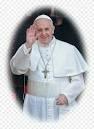 “One has to strongly affirm that condemnation to
the death penalty is an inhuman measure that humiliates personal dignity, in
whatever form it is carried out.”
“One has to strongly affirm that condemnation to
the death penalty is an inhuman measure that humiliates personal dignity, in
whatever form it is carried out.”


