|
2nd Sunday Easter |
|
|
Provisions for the Journey to Pentecost
Brief reflections on the week’s Scripture
readings
Now, you might say, “Well, they are tied together. We can’t save our souls if we do not adhere to the missive in Deuteronomy 15:4, which guided the early church: “There will be no person in your midst in need.” My question is what comes first? What drives the other? Is it more important to me that I save my soul or that I live to serve others? I believe the answer to this question matters more than we might imagine, especially for those of us who live in societies that place “my right, my good” above the good of the community. Provision: What is your opinion? I think about Paul’s words in Roman 9:2-3: “For my people, my Jewish brothers and sisters. I would be willing to be forever cursed—cut off from Christ! —if that would save them.” I used to attribute these words to Paul’s dramatic flair, and yet, perhaps he really means it. I also remember reading about a ritual in the 17th century, prevalent in the British Isles, called “sin eating.” A despised member of a community would eat a meal off the chest of someone recently deceased (who had not had the last rites) as a way to “eat their sins,” thereby freeing the deceased from damnation and bringing great comfort to the family and community. The “sin eater” would be paid a small amount but, accepting his or her fate, was shunned, despised…ostracized by the community. Sound like anyone we know? “But he was pierced for our sins, crushed for our iniquity. He bore the punishment that makes us whole.” “How much am I willing to suffer, giving up my possessions of comfort, safety, security for the betterment of the community?” “Would the Crucifixion have had any sublimity or meaning if Jesus had seen himself crowned with the halo of martyrdom? What we have later added was not there for him. And we must forget all about it if we are to hear his commands” (from “For the Sacrificed,” by Dag Hammarskjöld, Bread and Wine: Readings for Lent and Easter (Second Edition). Monday, April 13: “Why do the nations rage and the peoples utter folly? The kings of the earth rise up, and the princes conspire together against the LORD and against his anointed” (Ps 2). “As they prayed, the place where they were gathered shook, and they were all filled with the Holy Spirit to speak the word of God with boldness” (Acts 4:23-31). Have you heard anyone “utter folly” recently? In the Hebrew, the translation is “murmur vain things.” I take issue with the word “murmur!” [SIGH!]. Provision: Channel the Spirit. Shake things up! How are you called to channel the Spirit? Not everyone is called to be an activist, but I am so impressed by the number of people of all ages, in countries all over the world, willing to step out of their comfort zones to protest and resist authoritarian regimes. In what “rooms” do you gather that might need a good shaking? Perhaps it is at church or a book club Or, maybe it’s a country club; that’s even better! What would it look like for you to speak boldly—not brutally—but boldly, and not just in your echo chambers but in your everyday life? Tuesday, April 14: “The wind blows where it wills, and you can hear the sound it makes, but you do not know where it comes from or where it goes; so it is with everyone who is born of the Spirit." Nicodemus said, “How can this happen?" Jesus answered, "You are a teacher of Israel, and you do not understand this?... we speak of what we know, and we testify to what we have seen, but you people do not accept our testimony” (Jn 3:7-15).
Why does
Jesus chide Nicodemus for not understanding things of the Spirit? I guess he
didn’t memorize Joel 3:1: Provision: Be open to the Spirit however she comes! We tend to want some sign of Jesus’ presence, some physical affirmation. (Remember, those standing under the cross, telling Jesus to come down so that they may believe!) “By their fruits, you will know them.” Good, holy fruits. It is by these that we testify to new birth in the Spirit.
Wednesday, April 15:
This is
the verdict, that the light came into the world, but people preferred darkness
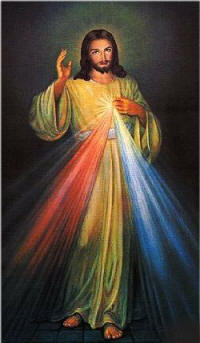
to light, I just read two books about light and darkness. One, I’m sure many of you read a long time ago: All the Light We Cannot See, written in 2014 by Anthony Doerr (I am way behind on my stack of novels!) The second, Learning to Walk in the Dark, a memoir also written in 2014 by Barbara Brown Taylor (I guess I am behind on all my reading…too many books, not enough time!). In different ways, both are about living in darkness and yet being able to see the inner light that emerges; and, indeed, in some cases, needing the dark in order to find that inner light. I love the quote Taylor uses to begin her memoir: “There is a tendency for us to flee from the wild silence and the wild dark, to pack up our gods and hunker down behind city walls, to turn the gods into idols, to kowtow before them and approach their precincts only in the official robes of office. And when we are in the temples, then who will hear the voice crying in the wilderness? Who will hear the reed shaken by the wind? (Chet Raymo, from The Soul of the Night. (Another for the reading list!) Provision: Don’t assume all darkness is evil. As long as you bring the Spirit along, the darkness can be a place of great growth. We know that all growth begins in darkness: in the earth, in the womb, and as we celebrate this season, in the tomb. We know of the Christian mystics—John of the Cross, the anonymous author of Cloud of the Unknowing, Hildegard, Julian—all spoke of luminous darkness. We remember Solomon’s words, “God plans to dwell in a dark cloud” (1 Kgs 8:12). There is a lot of darkness covering the land right now, and yes, some of it is evil. So, let’s remember from today’s psalm: “The angel of the Lord encamps around those who fear God and delivers them.” Keep your eyes on the Spirit. She will lead you to find the light that resides within you. Thursday, April 16: “We gave you strict orders, did we not, to stop teaching in that name. Yet you have filled Jerusalem with your teaching and want to bring this man’s blood upon us” (Acts 5: 27-33). “Excuse me, Sanhedrin fellas. I seem to recall something you said to Pilate when he washed his hands of Jesus’ blood: “Let his blood be on our hands and the hands of our children” (Mt 25:27). Now you won’t even say his name and are doing exactly what Pilate tried to do.” Isn’t it so typical of people in high places, trying to cast blame on others when the going gets tough. What could have been if they had put their pride and egos aside? Provision: Call out hypocrisy. One thing that makes me crazy is how often those in power directly contradict something they said or did last year, last month…heck, a half hour ago…and no one seems to call it out. As Christians, we are to model our lives after Jesus. Most people think of his care for the downtrodden, his healing touch, his nonviolent resistance, his prayer life, his devotion to God. But let’s not forget: Jesus was a master at calling out hypocrisy (read Matthew 23). Have you ever considered this is to be an attribute we are to model as well? Friday, April 17: Since Jesus knew that they were going to come and carry him off to make him king, he withdrew again to the mountain alone (Jn 6:1-15). Jesus never wanted to be a king. At least not in the way the crowds defined it. And I must admit, I think the same holds true today. The recent “No Kings” protests against the US administration indicate we still have that same definition of a king: distant and separated from the people, acting on a whim and without compassion, accumulating wealth and power. The idea of a Servant King, or even more so, a Suffering Servant King is just not part of our human worldview. But this is the only kind of king Jesus wants to be: close to and living with his people, acting with justice and mercy for the good of all, eschewing power and wealth by empowering others and making sure everything is shared for the good of all. Provision: How is Jesus your king? Is there an image of Jesus with which you pray? The crucified king? The resurrected king? The infant king in the manger? The good shepherd king? The king of the universe, reigning in heaven? Your closest confidante and friend? Have you ever thought about how Jesus might want you to relate to him? This is a great springboard for prayer. Ask Jesus how he sees you and then ask him how he would like you to see him. Saturday, April 18: The sea was stirred up…. they saw Jesus walking on the sea and coming near the boat, and they were afraid. He said to them, “It is I. Do not be afraid” (Jn 6:16-21). This scene has been painted enumerable times, showing Jesus walking ever so lightly upon the rough waters. I imagine this is how Jesus walked upon the earth as well. He respected his Father’s creation and treated it gently. Provision: Tread lightly. “Through life, I want to walk gently. I want to treat all of life – the earth and its people – with reverence. I want to remove my shoes in the presence of holy ground. As much as possible, I want to walk in peace. • I want to walk lightly, even joyfully, through whatever days I am given. I want to laugh easily. I want to step carefully in and out of people's lives and relationships. I don't want to tread any heavier than necessary. • And throughout life, I think I would like to walk with more humility and less anger, more love and less fear. I want to walk confidently, but without arrogance. I want to walk in deep appreciation. I want to be genuinely thankful for life's extravagant, yet simple, gifts – a star-splattered night sky or a hot drink on an ice-cold day. • If life is a journey, then how I make that journey is important. How I walk through life” ― Steve Goodier, author. Walk today--wherever you are. In nature or on a busy city street. Tread lightly. Be grateful. Respect God’s creation.
• © 2026, Elaine H. Ireland Contact ehireland@gmail.com. |
|

























 Sunday, April 12:
  Please
forgive me in advance as I parse out a hermeneutical argument I have had with
myself for a while. In the Acts reading today, we hear how important community
is in the early church: people giving up their own property to make sure those
in need have enough and are treated equally. We hear in Acts 5 about a couple
zapped for not playing by these rules. The good of the community supersedes the
individual and their possessions. Then, in the reading from Peter, he says the
goal of your faith, my faith is “the salvation of our soul.” That sounds
self-centered to me.
Please
forgive me in advance as I parse out a hermeneutical argument I have had with
myself for a while. In the Acts reading today, we hear how important community
is in the early church: people giving up their own property to make sure those
in need have enough and are treated equally. We hear in Acts 5 about a couple
zapped for not playing by these rules. The good of the community supersedes the
individual and their possessions. Then, in the reading from Peter, he says the
goal of your faith, my faith is “the salvation of our soul.” That sounds
self-centered to me. 


